
How to move a fridge and a washing machine without damaging them
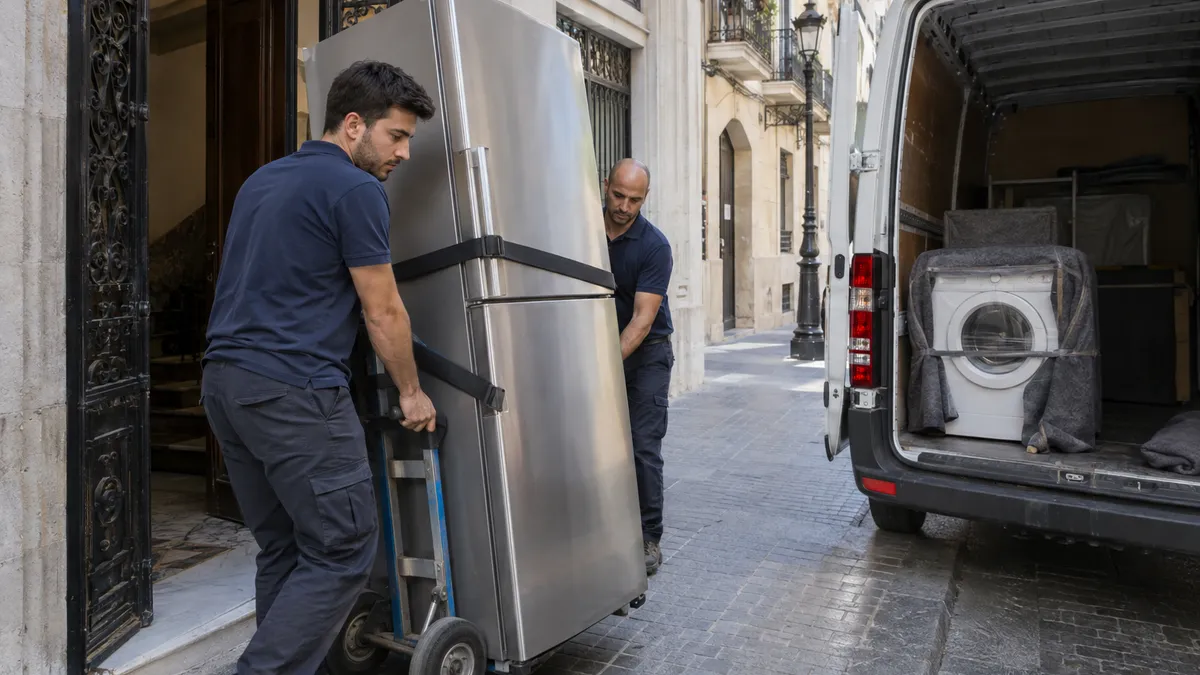
To move a fridge and a washing machine without damaging them there are three rules: the fridge travels upright and defrosted, and the washing machine travels drained and with the drum locked with its transit bolts. If the fridge was laid down, wait at least four hours before plugging it in. These are the appliances that break most often in a move, and almost always because of these three mistakes.
The video sums it up in 40 seconds; below you have the step by step and what to do the day before.
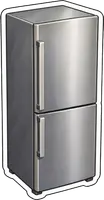
How to move a fridge: always upright
A fridge has a compressor filled with oil that lubricates the motor. If the fridge is laid down, that oil can flow into the pipes of the cooling circuit. If you then plug it in straight away, the compressor starts without lubrication and can burn out or stop cooling.
- Keep it upright in the van, strapped to the side of the vehicle so it does not move on bends.
- If it does not fit upright (a low door, a tight stairwell), tilt it as little as possible and onto its side, never upside down or resting on its back, where the coil is.
- Protect the corners and the front with a blanket: steel doors mark with any rub.
How long to wait before plugging the fridge in
| How it travelled | Wait before plugging in |
|---|---|
| Upright the whole time | 1–2 hours |
| Tilted for a while (stairs, door) | At least 4 hours |
| Lying down during the trip | 4 hours minimum, ideally overnight |
These are reference times most manufacturers give; your manual may say otherwise. Once plugged in, give it a few hours to cool before filling it again.
Before the move: unplug and defrost
A fridge full of ice loses water during the trip and arrives wet inside and out. The day before:
- Unplug the fridge about 24 hours ahead, especially if it has a freezer.
- Empty it and eat or give away anything perishable. What you want to keep goes in a cool box.
- Take out trays, drawers and glass shelves and wrap them separately: they are the first thing to break.
- Dry the inside well and leave the doors ajar for a few hours so it does not smell.
- On moving day, tape the doors shut with packing tape, without sticking it straight onto delicate surfaces.
If you are moving in July or August, think about the heat inside the van and in the stairwell: we cover it in our tips for moving in summer.
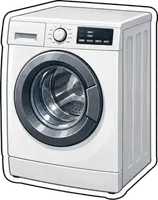
How to move a washing machine: lock the drum
A washing machine is heavier than it looks (60–80 kg) and its weak point is the drum. It hangs on springs and shock absorbers; if it travels loose, every bump makes it hit the tub and can break the suspension.
- Run an empty spin cycle the day before and empty the filter (the small hatch at the bottom front): there is always water left.
- Disconnect and drain the inlet and outlet hoses, and keep them inside the drum or in a bag tied to the machine.
- Fit the transit bolts at the back. They are the ones that came from the factory when you bought it. If you do not have them, order them with the exact model from the service centre or a spare-parts shop.
- Keep it upright, strapped in. Lying down, leftover water can reach the electronics.
- On arrival, remove the bolts before switching it on. If it runs with the drum locked, the spin cycle damages it.
American fridges, wine coolers and other appliances
Not every fridge moves the same way. Before the move, check what you have at home:
- American-style fridge (two doors) or with a water and ice dispenser. It is wider (90 cm or more) and weighs over 100 kg. Measure the flat’s doors, the building entrance and the lift first: often the fridge doors have to come off to get through. Empty the water tank and disconnect the supply with the stopcock closed; otherwise the pipe drips on the way.
- Wine cooler. It has the same kind of compressor, so the same rules apply: upright, and rest before plugging in. Take the bottles out and move them separately, in boxes with dividers.
- Chest freezer. Here the right position is its normal one, horizontal, with the lid taped. Defrost it a day or two ahead: it takes longer than a fridge.
- Dishwasher. Drain the water at the bottom, disconnect the hoses and secure the racks with tape. It travels upright.
- Tumble dryer. Empty the condensed-water tank and clean the lint filter. It has no transit bolts, but the drum is happier upright.
Measure first: doors, stairs and lift
The most common problem on moving day is not the weight but that the fridge does not fit through. Ten minutes with a tape measure save a lot of time:
- Measure the fridge with the doors on: height, width and depth, including handles.
- Measure the narrowest point on the way out: the kitchen door, the hallway, the flat’s door, the building entrance and the lift (door width and cabin depth).
- On a staircase, look at the landings and the turn between flights: a tall fridge needs room to turn upright.
- If it does not fit, the fridge doors or the flat’s doors can come off. Mention it when you ask for a quote so the crew brings tools.
The same goes for the new home: measure the kitchen recess where the fridge will go and leave a few centimetres behind and above so the air can circulate.
Mistakes we see often
- Filling the washing machine with clothes or small items to “save space”. The extra weight pushes the drum even with the bolts in.
- Using the fridge as a box, with food or bottles inside. The shelves break and the doors drop.
- Dragging the appliance across the floor. Parquet and tiles get scratched and the levelling feet get damaged. Use a hand truck and a blanket underneath.
- Plugging the fridge in as soon as it arrives because “it was only lying down for a moment”. That is exactly what to avoid.
Can I do it myself or do I need movers?
A standard fridge-freezer and a washing machine can be carried down by two people with a hand truck and straps, but in a building without a lift or with a narrow staircase it is easy to hit the stairs, the door or the appliance itself. When you ask for a quote, say which appliances there are, the floor and whether there is a lift: we take it into account and brings a hand truck and blankets. Carrying up or down floors is priced in the quote.
If you only need to move one or two appliances, see furniture and appliance transport in Valencia. If the old appliance no longer works and you want to get rid of it, here are the options for furniture and appliance collection, free or paid.
Moving-day summary
- Fridge: unplugged 24 h before, empty, dry, doors taped, upright.
- Washing machine: drained, hoses off, transit bolts in, upright.
- On arrival: fridge resting 1–4 hours depending on how it travelled; washing machine without the bolts before the first wash.
Moving in Valencia? Message us with both addresses, the floor and which appliances need moving: we give you an approximate price and we confirm the final one before the day.